
Ask me if I know any mainstream TV shows that spotlight Vietnamese-Americans, and I wouldn’t be able to tell you much of anything. The most modern example would be the character Diane Nguyen from Bojack Horseman, but even then I have a lot of reservations on what the writers did with her in regards to representation.
But every holiday season, I always think back on the Christmas episode from Craig Bartlett’s Hey Arnold! The series as a whole is a master class on translating adult themes into kid-friendly stories, but this episode in particular—one that broadcasted in 1996—centered on the show’s one Viet-Am character, Mr. Hyunh.
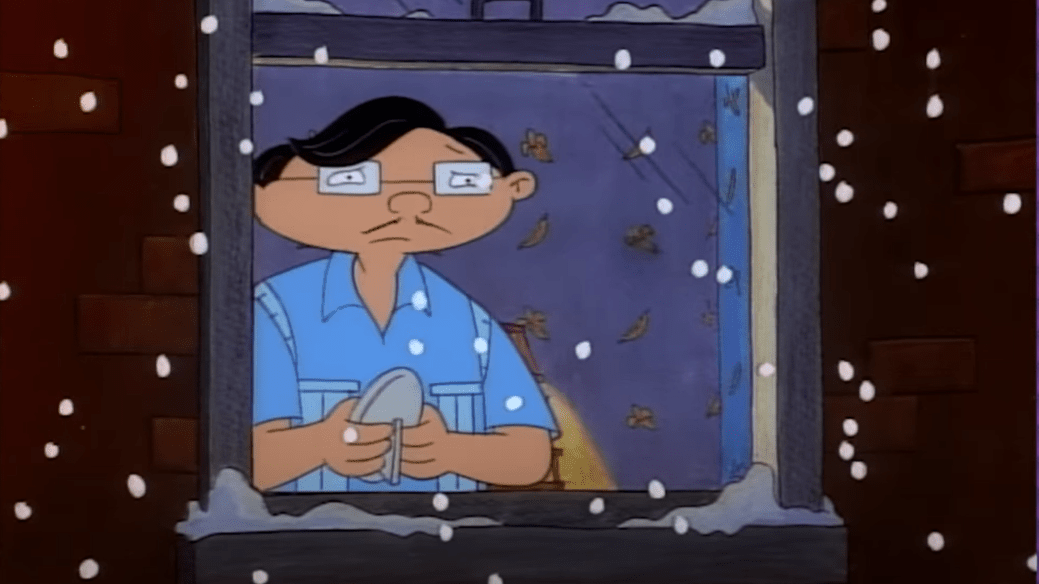
There are few if any animated series that discuss real-world events as well as Hey Arnold! does. And I was stunned to see them briefly tackle the story of a Vietnamese immigrant who’d experienced the Vietnam War and its many tragedies. Specifically, Mr. Hyunh recounts how he gave up his daughter Mai to American soldiers in the hopes of giving her a better life (most likely a reference to Operation Babylift). Twenty years later, he moves to America and has yet to reunite with her. In the spirit of the holidays, the main character attempts to do just that.
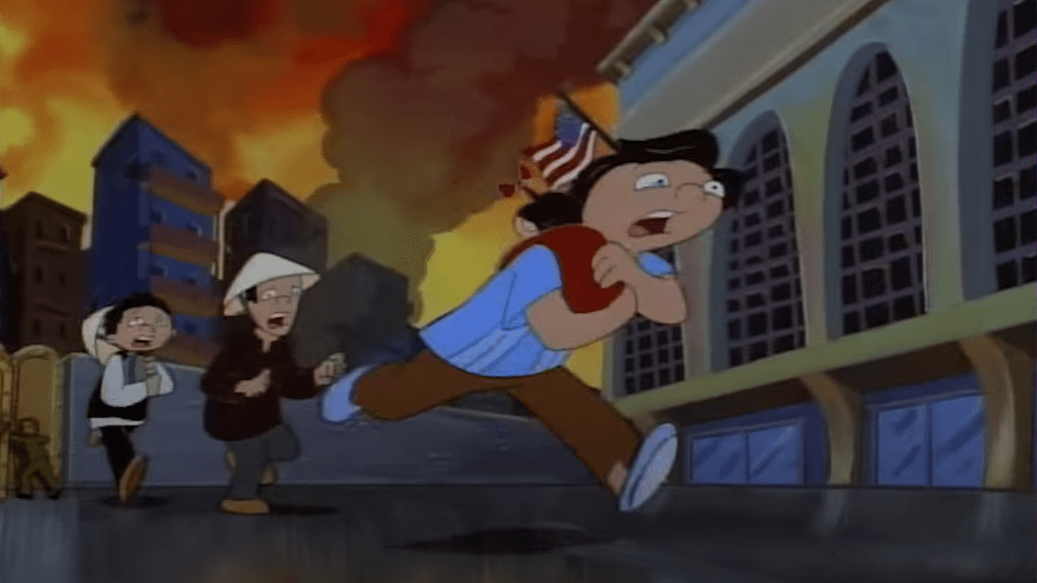
Outside of the brief lesson on the Vietnam War that my school brushed over (common of any subject in U.S. history that doesn’t portray it in a shining light), I never saw anything that represented myself or my parents at the time. And while it didn’t bother me too much as I lived in a largely Viet-Am community, I think my mind was blown the moment I witnessed this episode on TV. To have a well-written piece discuss something that was a part of my background and identity—that wasn’t a skit or cải lương performance on Paris by Night—was something I never fathomed as a kid. This 20 minute episode helped me in distinguishing what it meant to be Vietnamese versus Vietnamese-American and all the diaspora that came with it.
On the topic of the war itself, it’s not always something that Vietnamese immigrants like to discuss at large. War is traumatic, and despite my curiosity I often choose not to ask my parents about what they’d been through in fear of having them relive some of those traumas. So in a way, this episode helped shine some light on what that experience might have been like. For many kids like myself, this was a good start in discovering the events that our past generations went through. There are many works out there that shed light on what happened, such as PBS’s documentary Daughter from Danang and Qui Nguyen’s recent play Vietgone, but this story is digestible in the family-friendly cartoon Christmas miracle kind of way.
Make no mistake though, Hey Arnold! is a series that bases many of its stories within realism. There’s no magic or mythological deus ex machina here—at least in this episode. And yet the writing is immaculately set up to give you that warm fuzzy feeling by the end.
But what really pulls at my heartstrings is in the final scene, in which Mr. Hyunh and his daughter start speaking Vietnamese. This moment—specifically—is what always grabs my attention whenever I think about this episode. When Mai calls out to her father in Vietnamese (Ba), and when Mr. Hyunh tells her how much he missed her (Trời ơi ba nhớ con quá), my heart just swells. Never in my life at the time would I have expected actual fluent Vietnamese in an American cartoon show let alone any American show. And I can’t help but give Craig Bartlett and his writers praise for making this decision. This is one of the most respectful stories on the Viet-Am experience that I’ve seen. It’s amazing how just a few seconds of two characters conversing in Vietnamese was enough for me to start tearing up.
Fast forward to 2020, and Asian-American representation has come a long way with so many As-Am centric characters, shows, and movies that have come out in recent years. Of course, there are certainly still problems with how the Academy continues to handle such matters. Still, it’s nice to see how far we’ve progressed on this front. And while I’m ecstatic that we’ve had movies highlighting specifically the Chinese and Korean-American experience, here’s hoping we get some more Vietnamese-American representation in the near future.
 The Dang Void