
Don’t feel like reading? Scroll to the bottom for a TL;DR.
Personally, I’ve always enjoyed adventure games. The twists and turns in their stories—along with their endless puzzles—makes you really flex your brain and/or get frustrated to the point of looking up a guide. The Council, developed by Big Bad Wolf Studios, takes the concept and pushes it with a more RPG-like aspect that creates a fresh experience in terms of how it handles its gameplay.
The Story Is a Fun, Incohesive Mess
Set in an alternate-reality 18th Century Europe, you play as Frenchman Louis de Richet, member of a fictional secret society called the Golden Order (think Illuminati but worldwide). Your mission is set from the get go: find your mother, leader of the order, who’s gone missing on an island manor run by a mysterious and aloof man named William Mortimer.
There, you’ll encounter a handful of historical world leaders such as George Washington, Napolean Bonaparte, Manuel Godoy, and Johann Christoph von Wöllner. As you play, you’ll discover their agendas, whether or not they will be obstacles to your own goals, and find ways to make them your allies. It’s a fun premise that reminds me of traditional board games such as Clue, although the interpretations of these historical figures are a little jarring at times. Some have proper accents, others don’t, and your character’s voice actor borders on monotone and lacks a lot of inflection. The Bioware-level of stilted animation and facial expressions doesn’t help things.

Without revealing any spoilers, I’ll say the first half of the five-part episodic series lends well to your traditional murder/mystery tropes. Your goal is clear, and there are numerous interesting side plots that may or may not coincide with how you achieve your own mission. It’s not until the second half that things get a little wonky. New story elements such as the supernatural are revealed without any sort of build-up. The pacing becomes incredibly disorganized, and the various endings are rather anti-climactic in the way they’re presented.
While story details are discovered sporadically by design as you make your choices throughout the game, the whole thing doesn’t lend to a more complete storyline no matter what you decide. By the latter half of the game, you are bombarded with multiple McGuffins and red herrings while past plot twists are ignored or glossed over completely, causing some major plot holes that never get addressed. It’s a bit like an Aaron Sorkin movie, where you’re constantly trying to catch up—just not executed as well. Despite that, the writers play around with religion and other real-world mythos in a way that got me to keep playing. I got really caught up in finding out more about what they planned on doing that I was willing to forego all the faux pas. The mystery part of the story remains intact despite all its misgivings.
You Fight People and Level Up…With Your Words

Along the style of Bioware and Telltale games, The Council‘s main schtick is that you are given a dialogue wheel of varying responses when in conversation with the game’s colorful cast of characters. What you choose to say changes the outcome of the story, and creates multiple branching paths as you continue playing. In this case, these conversations are called confrontations.
This game expands and plays around with the genre in that it provides a class-based level-up system. Through it, you allocate points to varying skills that provide new abilities and specific dialogue choices. For instance, you can level up your knowledge in psychology to better analyze characters’ body language or increase your skills in subterfuge to pick locks and sneak around an area occupied by people you wouldn’t have encountered otherwise.
The amount of variety and customization of your character allows for some fun experimentation. You could be an expert in the occult, a rough and ready investigator, or perhaps a scummy politician. Whatever you decide on, you’ll have strengths and weaknesses that come in the form of “effort points”—the game’s limited resource system that your skills rely on (think MP as the traditional equivalent). The higher level a certain skill is, the less effort points it will take for certain actions and dialogue.
The individuals you encounter also have their own strengths and immunities to certain skills. As a result, you’re essentially doing your best to manage your resources while successfully navigating conversations. You’ll unveil the mysteries and personal conflicts behind each person you meet as you go—kind of like real-life networking! Gross!
Mix all these elements together, and you have an engaging style of gameplay that changes the way you play as events unravel. It’s a unique take that shakes up the formula just enough to keep you engaged.
Western Euro-centric History Galore
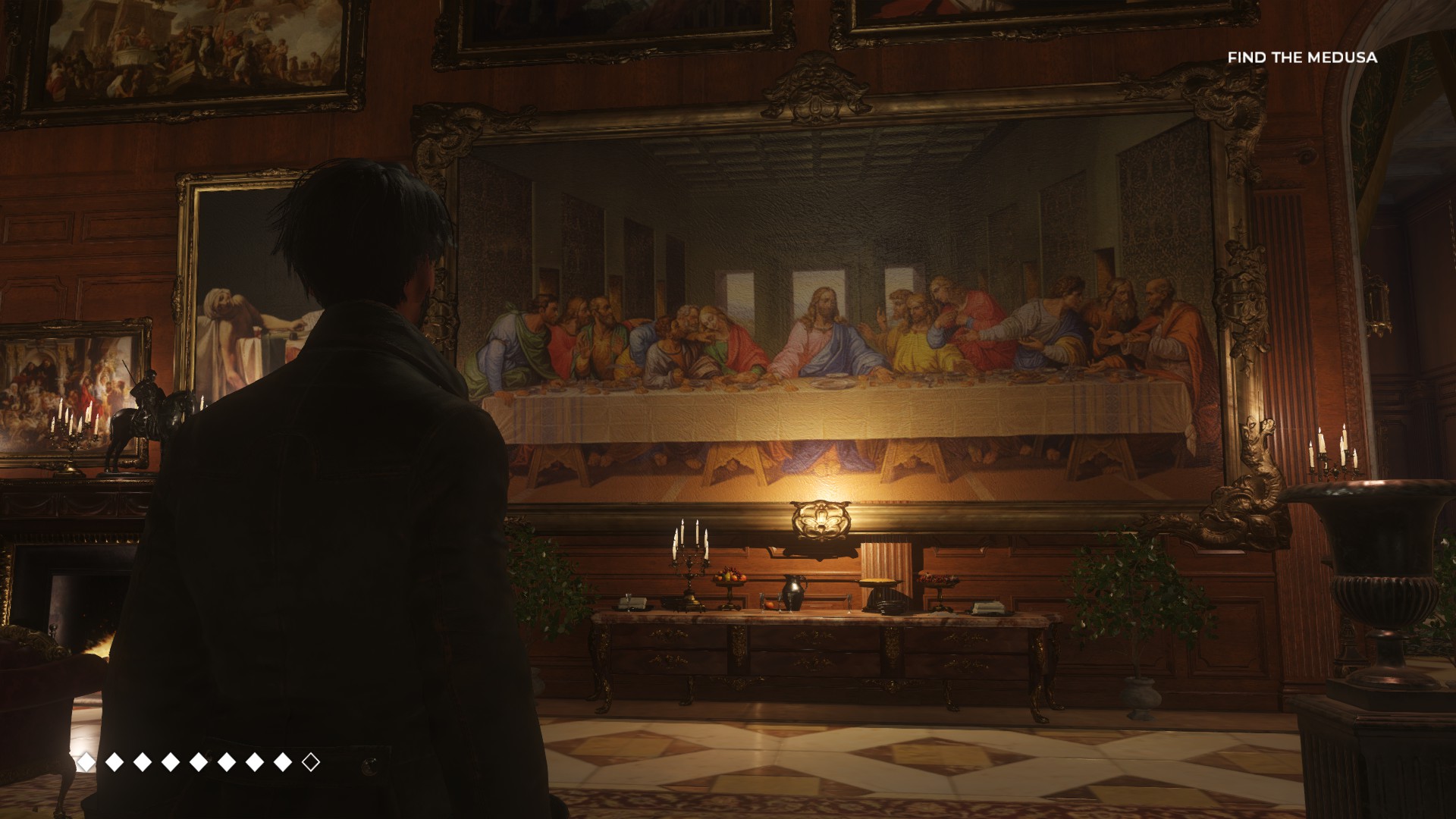
More of a personal gripe of mine, The Council‘s setting, atmosphere, and story references nothing but Western European art, history, and religion. It even goes to have Louis praise or comment on them, mentioning how much they influenced him as he grew up. I don’t have Christian or Catholic roots nor do I take much interest in Western European history, and so much of what was presented to me just wasn’t all that resonant.
And while this game in particular likes to glorify such works of art while barely mentioning Eastern or African history outside of the lens of the West, it also addresses more progressive issues in a positive light, such as advocations for women’s voting rights, abolishing slavery, and unionizing laborers. In fact, it also has you debate what would be considered a better system of government at the time: democracy or monarchy. Maybe it’s my own bias towards education often focusing only on well…white historians, but something simply felt off between these two somewhat contradictory aspects of the game.
Everyone is So Ugly

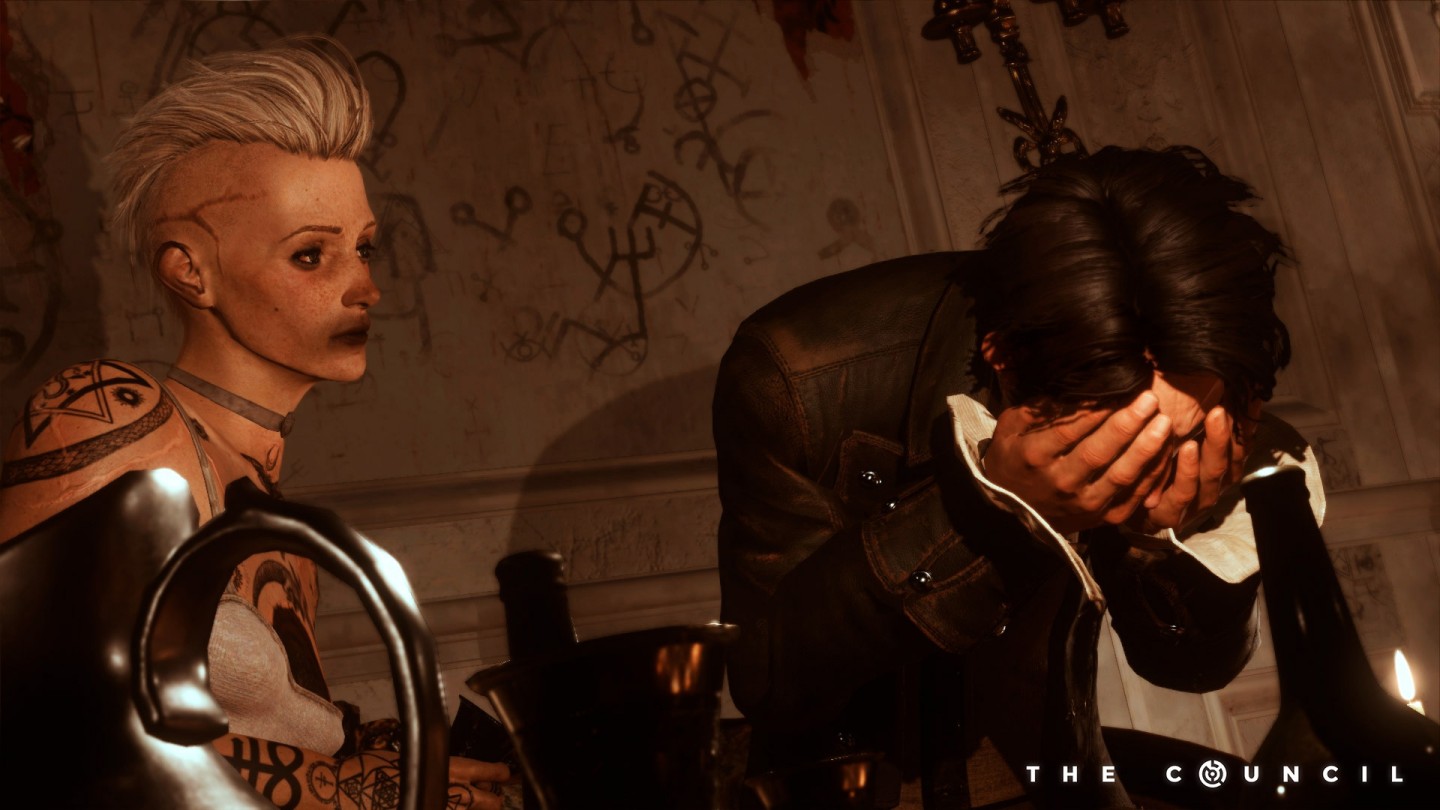
The graphics are decent and nothing to write home about. But some characters’ designs are absolutely monstrous to look at. Exhibit A above. That’s it. That’s all I wanted to talk about in this section.
TL;DR

If you enjoy a rousing romp of the board game Clue, are a Western history and art buff, love all things supernatural, and enjoy both RPG and adventure games in the style of Telltale and Bioware, then The Council might be a good fit. Just be aware that the story gets quite nonsensical by the end, and the poor voice acting of the main character at times can cause a loss in immersion.
 The Dang Void